Dryers · Gas and electric · Six towns
Dryer Repair in Lynnwood, Shoreline & Everett, WA
Drum turning with no heat, a squeal on every rotation, or bath towels that need a second run? We fix gas and electric dryers in Lynnwood and five neighboring towns, and we look at the vent before blaming any part.
- Diagnostic fee quoted on our callback, part of the repair price on your yes
- A written figure on paper before a single tool comes out
- Visits Monday to Sunday, many the same day you phone
- WA-licensed appliance repair
- LG and Whirlpool authorized service
- EPA 608 Universal refrigerant certification
- Sealed-system work done at your address
- On the road seven days, 8 to 7
- Gas and electricIgniters, gas valve coils, elements and thermal fuses
- Vent firstWe check airflow before replacing any heat part
- Gas odorWalk out first; phone the gas utility outside
Dryers
Why dryers stop heating or drying
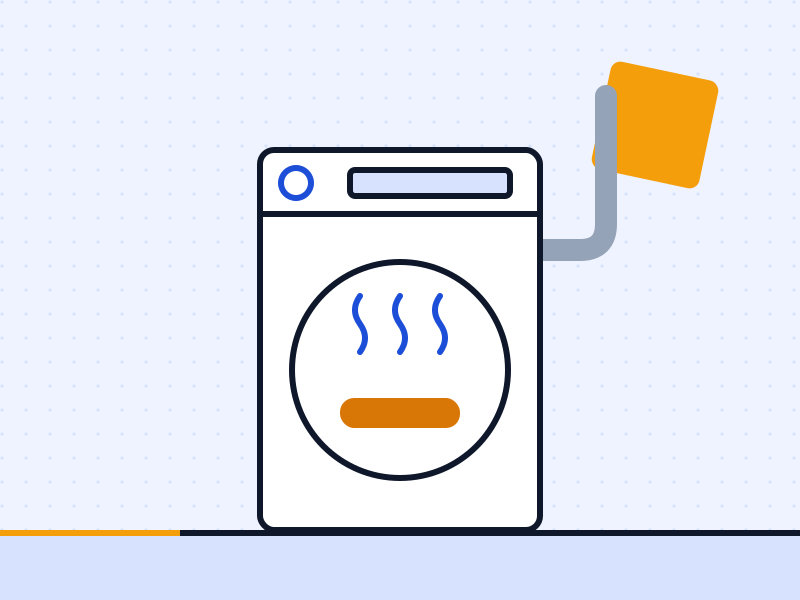
Electric models warm the air with a coiled element fed by a 240-volt circuit. Gas models light a burner using a hot-surface igniter, a flame sensor and a pair of gas valve coils. Both types share one chain of switches: a cycling thermostat that holds drying temperature, backed up by a high-limit thermostat plus a one-shot thermal fuse, which cut the heat when the exhaust runs too hot. Getting that hot, wet air outdoors falls to the vent, and plenty of no-heat complaints start there. An overlong run, foil ducting flattened against the wall, or a lint-packed hood keeps heat in the drum; the high limit starts tripping and eventually the fuse opens. Swap the fuse and leave the vent alone, and the new one goes the same way, so our technicians test the airflow along with the part.
Our weather makes the vent matter more than it would in a dry climate. Winters are mild but soaked, and ducting routed across a crawlspace or an unheated garage chills the exhaust until moisture beads inside, grabs lint and begins a blockage. In Lynnwood and Everett condos the duct frequently travels a long horizontal path to an outside wall. Gas dryers show up mostly where a home already has a gas line: Mill Creek, where more than half the houses heat with gas, and Edmonds, at about half. Everett leans electric. Dryer brands we work on include Amana, Electrolux, Frigidaire, GE, Kenmore, LG, Maytag, Samsung, Speed Queen and Whirlpool, along with compact Bosch and Miele units.
Symptoms
Dryer faults we see most
Tumbles but no heat (electric)
Begin at the panel: an electric dryer needs both poles of its double breaker, and with one pole tripped the drum keeps turning while the element sits cold. If both poles are live, look to the parts that can open: element, thermal fuse, and the high-limit and cycling thermostats. The technician checks voltage at the terminal block with a meter and tests each part for continuity.
Gas dryer will not light
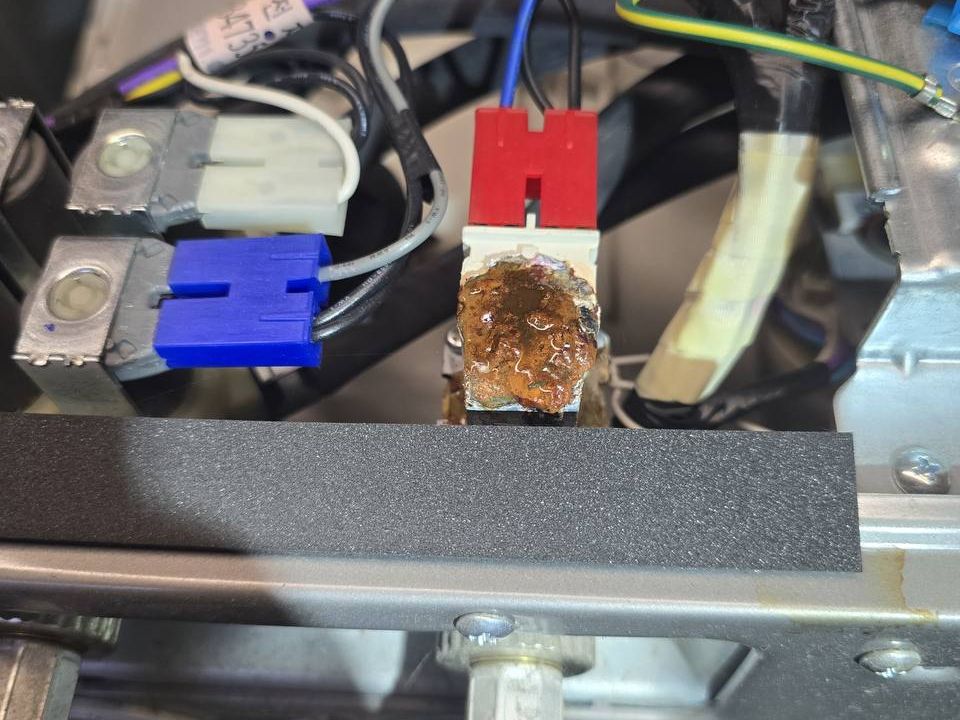
When the igniter turns bright orange, then dims and no flame catches, the gas valve coils are most often to blame. If it never glows, look at the igniter, flame sensor and thermal fuse. The technician reads resistance on each coil and on the igniter, checks that the shutoff on the gas line is open, and replaces only the piece that fails its test.
Clothes still damp at the buzzer
If heat is present but a load needs two runs, the airflow is nearly always choked: lint caked in the duct, a flattened transition hose, or a hood damper that will not swing open. Sensor-dry models also quit early when softener residue films the moisture strips. We measure the exhaust where it leaves the house.
Dead when you press start
No response at all can mean a blown thermal fuse, which on many models cuts the motor along with the heat, a failed door switch, a snapped belt tripping its switch, or a worn start switch. We confirm power at the outlet, then work down the chain of switches until one fails its reading.
Squealing, thumping or scraping
A rhythmic squeal usually comes from drum rollers gone dry or an idler pulley with a worn bearing; a thump can mean rollers with flat spots; scraping often means a worn front glide or felt seal. We open the cabinet, turn every wheel by hand, and replace rollers and pulley as a set when one has worn out.
Quits partway through the cycle
A dryer that stops after a short run is often overheating: the motor’s internal overload trips, or a high-limit thermostat opens on restricted airflow. A failing motor may run hot and hum loudly before it quits. We measure exhaust flow and current draw to separate a tired motor from a choked vent.
Stop by stop
Seven stops on a repair run
Each stop is a machine we fix most weeks. Ride the line or tap a stop.
Stop 1 of 7
Dryers
Two runs to dry a towel load, a cold drum, a vent run packed with lint.
Dryer repair page →

Before you call
Dryer checks you can make safely
- Clear the lint screen, then wash it with warm water and a little dish soap if softener sheets have glazed the mesh.
- Start a cycle, walk outside, and check that the vent hood damper swings open with warm air pushing through.
- For an electric dryer, reset both halves of the double breaker, even if only one looks tripped.
- Ease the dryer forward and look for a crushed or kinked foil hose squeezed against the wall behind it.
- On a gas dryer, confirm the shutoff handle on the supply pipe lines up with the pipe, which means open.
By town
Dryers from Shoreline to Everett
Lynnwood’s apartment and condo dryers, many in closets near City Center and along Alderwood Mall Boulevard, fight long concealed vent runs. Mountlake Terrace’s smaller 1950s homes often vent straight through a wall, which keeps airflow good but leaves a hood that rain and lint can jam. In Shoreline, ramblers with crawlspace vent runs collect condensation every winter, and gas dryers are common where the house already has gas heat. Edmonds hillside homes share that crawlspace trouble, and with half the homes on gas heat, gas dryers are frequent. Mill Creek’s newer builds often put laundry upstairs with long runs to the roof. Everett leans electric, so elements and thermal fuses dominate there.
Repair or replace
Is the old dryer worth another repair?
Few household machines are as fixable as a dryer. Elements, igniters, valve coils, fuses, thermostats, belts, rollers, motors and boards can all be swapped, which makes repair the sensible path more often than with washers or refrigerators. The exceptions are a drum that has rusted or split, a motor and board failing together in an old cabinet, or a housing scorched by overheating. We also chase the cause, since a brand-new dryer hooked to a choked vent will cook its own fuse before long. Turn the repair down and the diagnostic visit is where your bill ends. Still under warranty? LG and Whirlpool-family dryers get the covered repair from us as authorized service; for other brands, take it to the maker first.
Questions
Dryer repair questions
Looking for dryer repair near me around Mill Creek or Everett?
Both towns sit on our regular rounds seven days a week, as do Lynnwood, Edmonds, Mountlake Terrace and Shoreline. A morning call gives you the strongest shot at a same-day slot; send a request through the website instead, and a return call from us books the two-hour arrival span. Keep the model number handy, usually printed on a label just inside the door opening.
There is a gas odor near the dryer. What comes first?
Getting out. Take everyone outside, and only from the yard or the street phone 911 or the gas utility. Don’t touch light switches, plugs or the dryer itself, and do not hunt for the leak. After the line has been declared safe, schedule us; the technician then examines the shutoff valve, the flexible connector and the burner assembly before the dryer heats again.
Why does drying slow down every winter at our Shoreline house?
When the vent crosses a crawlspace or garage, cold surroundings chill the exhaust and moisture condenses inside the duct, binding with lint until the passage narrows. A sag in a long run can even pool water. The dryer then runs hot and slow, and the high-limit thermostat may keep switching the heat off. We measure airflow and tell you plainly what the vent run needs.
Is swapping the thermal fuse a do-it-yourself job?
Plenty of owners try it, and the replacement often blows within days, because the fuse was only reporting a deeper problem. It trips when exhaust temperature climbs too high, typically from a clogged vent or a cycling thermostat that sticks. Never jumper a fuse; that strips out a fire safeguard. The technician tracks down why it blew and corrects that along with the fuse.
The washer is acting up as well. Can both be looked at on one trip?
Yes. Name the washer on the request page or during your call, and the technician looks it over during that trip as well. The two machines are priced on separate written sheets, so approving work on the dryer never obliges you to fix the washer, or the other way around.
Since the power outage, my electric dryer spins but stays cold. Why?
An outage, or the surge when service returns, can knock out one pole of the two-pole breaker serving the dryer, so the motor keeps running while the element gets no current. Switch both handles fully off and back on. If heat is still missing, the technician checks voltage where the cord lands; when the fault lies in the house wiring, we will tell you an electrician needs to take it from there.
Start with a diagnostic visit
A dryer diagnosis comes with a fee that we quote at booking. When you okay the fix, that fee is already accounted for inside the written price; if you don’t, the diagnostic stands alone on the invoice.